
Safeguarding Information
At Alconbury Primary School, we take safeguarding extremely seriously. If you have ANY concerns about conduct of staff or safety of children please contact one of Designated Safeguarding Leads : Hannah Mulcrone – Co – Headteacher, Jane Watts – Co – headteacher, Steph Clitheroe – Deputy Headteacher, Michaela Payne – Early Years teacher and Charlie Hawkins – Year Six teacher immediately. We are aware that safeguarding includes a wide range of areas within school and these are identified below.
Our Prevent Lead is Mrs Jane Watts – Co – headteacher. Our Domestic abuse lead is Hannah Mulcrone – Co Headteacher
SAFEGUARDING – during times when the school is open.
Please ring the school office which is open between 8:30am -4:15pm and ask to speak to one of the Designated Safeguarding Leads.
If you have a safeguarding concern about a child please follow one of the following procedures:
If you think you or the child is in immediate danger and needs urgent help, please call the police on 999.
If you are concerned a child is at risk please contact the Local Authority on:
Telephone: 0345 045 5203 (8-6pm Monday to Friday) 01733 234 724 (out of hours)





Safeguarding and Child Protection Statement
Under section 175 of the Education Act 2002 (as amended), *the Education (Independent School Standards) Regulations 2014, the Non-Maintained Special Schools (England) Regulations 2015, and the Apprenticeships, Skills, Children and Learning Act 2009 (as amended) to have arrangements in place to safeguard and promote the welfare of children.
We will endeavour to provide a safe and welcoming environment where children are respected and valued.
The school will therefore be alert to signs of abuse and neglect and will follow the Cambridgeshire and Peterborough Safeguarding Children Partnership Board’s procedures to ensure that children receive appropriate and effective support and protection.
Parents/carers should know that the law requires all school staff to pass on information which gives rise to a concern about a child’s welfare, including risk from neglect, physical, emotional or sexual abuse. Parents/carers should know that records of safeguarding concerns may be kept about their child. They should be informed that school staff will seek, in general, to discuss any concerns with them including referrals to other agencies.
Local procedures state that “Consent should always be sought from an adult with parental responsibility for the child/young person before passing information about them to Children’s Social Care, unless seeking consent would place the child at risk of significant harm or may lead to the loss of evidence for example destroying evidence of a crime or influencing a child about a disclosure made.” This includes allowing them to share information without consent, if it is not possible to gain consent, if it cannot be reasonably expected that a professional gains consent, or if to gain consent would place a child at risk.
Where there is a need to share special category personal data, the Data Protection Act 2018 contains ‘safeguarding of children and individuals at risk’ as a processing condition that allows professionals to share information.
In accordance with legislation and local Information Sharing protocols, we will ensure that information is shared securely and sensitively. Information will only be shared with other services where it is deemed necessary and proportionate to ensure that children and young people are safe and receive the right service. In all circumstances, the safety of the child will be the paramount concern.
Schools will contact Children’s Social Care when they have reasonable cause to suspect a child may be suffering or likely to suffer significant harm. Occasionally, concerns are passed on which are later shown to be unfounded. Parents/carers will appreciate that the member of staff in the school with responsibility for child protection (known as the Designated Safeguarding Lead or Deputy Designated Safeguarding Lead) was carrying out their responsibilities in accordance with the law and acting in the best interests of all children.
Under Section 3 (5) of the Children Act 1989, any person who has care of a child “may….do what is reasonable in all the circumstances of the case for the purpose of safeguarding promoting the child’s welfare”. This means that on rare occasions, a school may need to “hold” a child in school whilst Social Care and the Police investigate any concerns further.
To view Keeping Children Safe in Education & Our Safeguarding Policy
please visit the policies section of our website.


Further support
NSPCC
NSPCC helpline | NSPCC
Whatever your worry – call the NSPCC on 0808 800 5000, email us, or submit our online form – we can help. We also have advice about spotting the signs of abuse. You can call Monday to Friday 8am – 10pm or 9am – 6pm at the weekends, or email us at any time. It’s free and you don’t have to say who you are.
– Website with information and resources relating to bullying and other child protection issues
– Comprehensive training offer for teaching staff and pupils that includes cyberbullying and peer mentoring (there is a charge for this service)
– Website with information and resources relating to e-safety and cyberbullying
– Information and resources for Safer Internet Day 2015
– Helpline operated by the UK Safer Internet Centre offering professionals who work with children across the UK support, advice and mediation with online safety issues. The helpline can be contacted by email: helpline@saferinternet.org.uk or telephone on 0844 3814772 (calls on this number are charged at local call rate).
– Website with information and advice for teachers and resources suitable for primary and secondary age pupils relating to e-safety and cyberbullying
EACH (Education Action Challenging Homophobia)
– Action line for children and young people with concerns about homophobic bullying
– 24 hour helpline for children and young people with concerns about bullying 0800 11 11
– Online support for children and young people with concerns about bullying
– Website with information about bullying including a new short video to build the confidence of children that have been bullied
The Diana Award (Anti-Bullying Programme)
– Website available to all with information, advice and good practice for young people, professionals and parents
– Training across UK and Ireland: Training targeting victims, perpetrators and bystanders. Young people can be trained to recognise bullying behaviour and its root causes as well to help their peers tackle bullying online and offline. Professionals can be trained to lead on Anti-Bullying work and support a peer led programme/student team
– 24 hour helpline for parents and carers that have concerns about bullying 0808 800 2222. They also have an email facility.
– Free helpline for parents and carers of disabled children that have concerns about bullying0808 808 3355.
– Free advice guides and training for parents and carers relating to bullying
– Network of parent support groups
The Child Exploitation and Online Protection Centre (CEOP)
– Website with information and resources for parents and carers about protecting children online www.thinkyouknow.org.uk
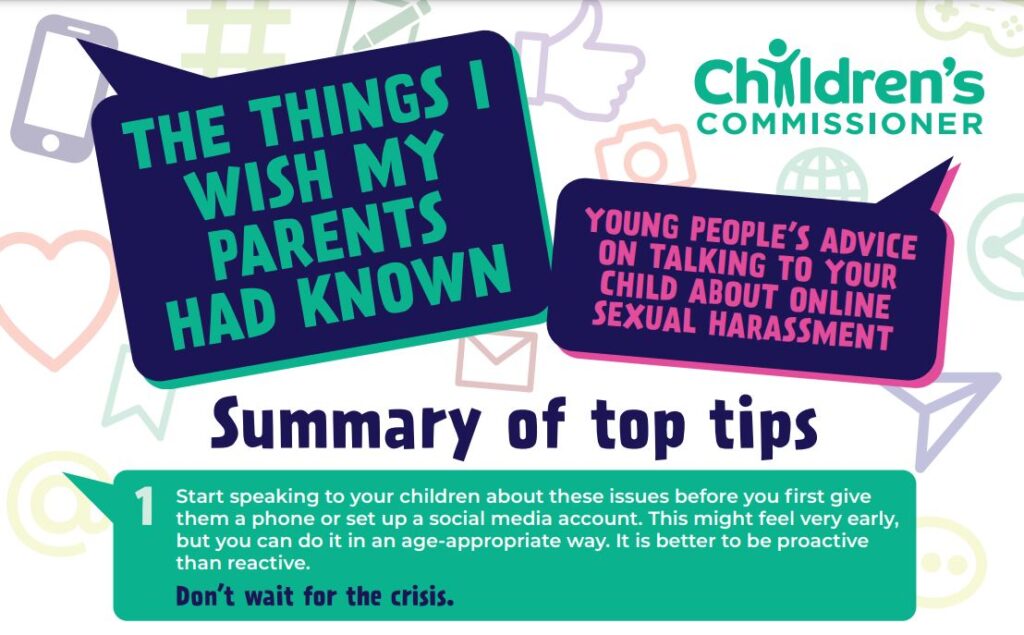
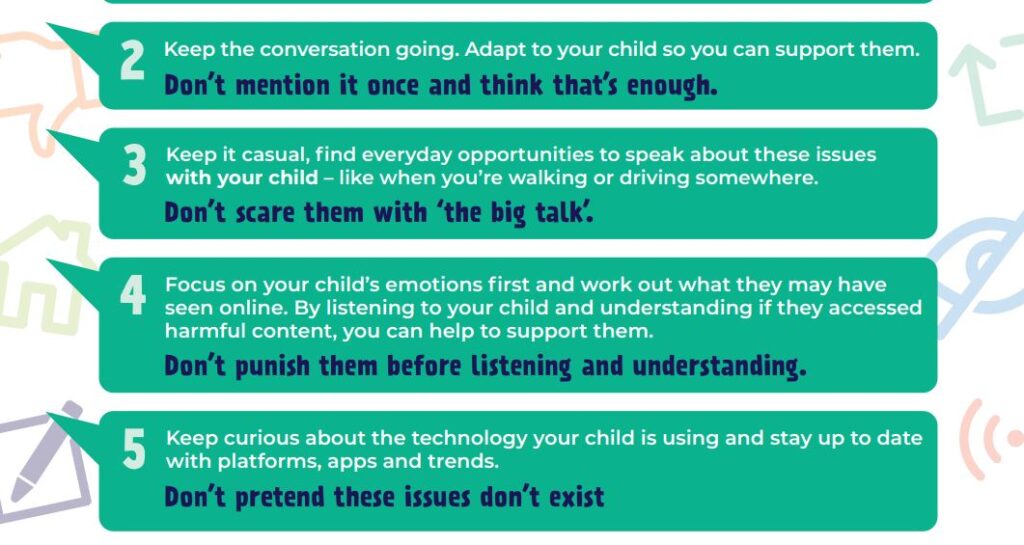
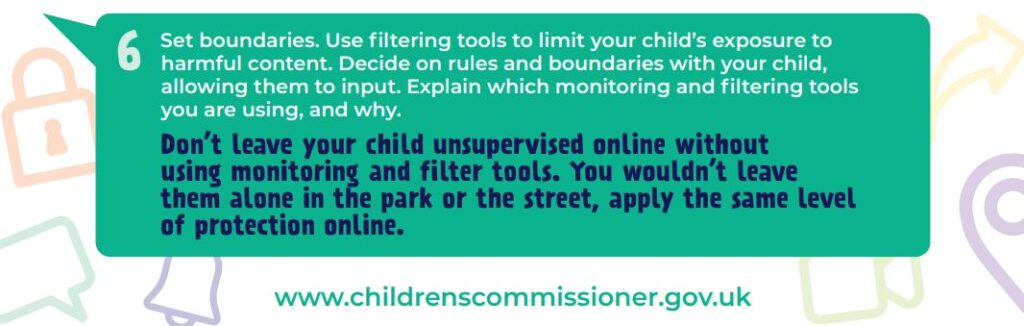
– Website with information and advice for parents and carers on how to keep your child safe online including how to make a report online